Friday, September 29, 2006

Math Experts Wrong?

Phyllis Schlafley's take on the change to New Math:
Parents Right; Math Experts Wrong.

It took parents 17 years to overturn the tragic 1989 curriculum mistake made by the so-called education experts who demanded that schools abandon traditional mathematics in favor of unproven approaches. The National Council of Teachers of Mathematics finally reversed course on September 12 and admitted that elementary schools really should teach arithmetic, after all.

Thursday, September 28, 2006

Saxon Placement Tests

If you would like to use Saxon Math but not sure which text to use, there is help. Saxon provides free online placement tests to help you figure out which textbook fits your child's academic skill.

Once you have the right textbook, have your student take the tests provided at the end of every 5 lessons. Just one test a day. This will help you determine where to start within the textbook. Once your child gets 3 or more problems wrong, begin the lessons.

Thursday, September 21, 2006

Music Lessons Help Math Students

Music lessons help young child memories

"On the other hand, it is very interesting that the children taking music lessons improved more over the year on general memory skills that are correlated with nonmusicalabilities such as literacy, verbal memory, visiospatial processing, mathematics and IQ," she said.

Monday, September 18, 2006

Tree Study

(cross-posted from the Love2learn Blog)

Fall is a great time for nature walks and for learning about trees...

Lapaz Farm has a very interesting post on the American Chestnut Tree with lots of links about general tree and leaf studies as well.

Measure the height of a tree using its shadow.


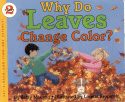
One of my personal favorite children's books is Why Do Leaves Change Color? by Betsy Maestro. Interesting content and great illustrations!


Dead Log Alive!
by Jo Kittinger describes the mini-ecosystem that can be present in a fallen tree. We especially enjoyed learning about mosses, lichens and fungi in this book. My son wrote about it this spring (with some interesting pictures!)


We've seen lots and lots of interesting fungi, mosses and lichens on trees or stumps on our nature walks lately. Though we've pretty much learned to distinguish between these three, we're not very good at identifying particular types yet. Here are some fun and/or interesting sites on fungi (If I understand it right, lichens are really a union of algae and fungi - those Lyrical Life Science CDs are starting to have an impact!)...

Fungi
Lichen
Giant Puffballs (We really enjoyed the humor here, but aren't brave enough to try eating them - besides which we haven't seen them on our own property before)
Identifying Tree Fungi

Also see:

MacBeth's Book and Activity List for the Fall
Elizabeth's Fall Reading Lists for All Ages

Thursday, September 14, 2006

Faith, Reason and the University

This new address of Pope Benedict XVI comes to shed further light in the discussion of science and faith.


Distinguished Ladies and Gentlemen,

It is a moving experience for me to stand and give a lecture at this

university podium once again. I think back to those years when, after a

pleasant period at the Freisinger Hochschule, I began teaching at the

University of Bonn. This was in 1959, in the days of the old university made

up of ordinary professors. The various chairs had neither assistants nor

secretaries, but in recompense there was much direct contact with students

and in particular among the professors themselves. We would meet before and

after lessons in the rooms of the teaching staff. There was a lively

exchange with historians, philosophers, philologists and, naturally, between

the two theological faculties.

Read the full text here

Math: Getting Back to Basics

Report Urges Changes in the Teaching of Math in U.S. Schools


In a major shift from its influential recommendations 17 years ago, the National Council of Teachers of Mathematics yesterday issued a report urging that math teaching in kindergarten through eighth grade focus on a few basic skills.

Wednesday, September 13, 2006

New Dwarf Planet Christened after Greek Goddess of Chaos and Strife

Appropriate since it caused the demise of Pluto as an "official" planet. Read more here.

Does Lightning come from Ice???

Here is a fascinating article on what scientists have studied and learned about what makes lightning happen. The only reason I had even heard of the concept before was from reading Flash, Crash, Rumble, Roll by Franklyn Branley aloud to my kids many times over the years.

Tuesday, September 12, 2006

Noon shadows on the Equinox

(Click on title above to visit the website)

This sounds like a fun project (originally written for schools):
You and your students are invited to participate in an annual daytime astronomy project titled - Noon Shadows on the Equinox. The fall (autumnal) equinox will occur this year at 12:03 A.M. EDT (04:03 Universal Time) on Saturday, September 23rd. At that moment, the Sun will cross the celestial equator, and it will mark the official start of autumn in the Northern Hemisphere and spring in the Southern Hemisphere. The activity should be conducted during the school day on Friday, September 22nd. During this outdoor lesson, your students will be measuring the length of a shadow cast by an upright meter stick. The time of the shortest shadow length measured all day will mark solar noon - the Sun's exact midday position in the sky. By calculating the angle between the tip of the shadow and the vertical meter stick at solar noon, your students should be able to determine their own degrees of north or south latitude (but let them discover this neat bit of astronomical geometry). All data submitted will be posted for viewing. Schools from as far away as Puerto Rico and Hawaii have participated in the past.


Saturday, September 09, 2006

Relative claims to absolute Truth

(The New Geocentrism, Part III)

This is in response to some questions rasised in a comment concerning Mary Daly's post on The New Geocentrism.

I address the question about the magisterium first. I cannot add much to what Mary has so ably expressed (see "Up to Date Cosmology"); I will add only what Pope John Paul the Great said on the subject:

The Vatican Council recognized and deplored certain unwarranted interventions: "We cannot but deplore" —it is written in number 36 of the conciliar constitution Gaudium et Spes— "certain attitudes (not unknown among Christians) deriving from a shortsighted view of the rightful autonomy of science: they have occasioned conflict and controversy and have misled many into thinking that faith and science are opposed". The reference to Galileo is clearly expressed in the note to this text, which cites the volume Vita e opere di Galileo Galilei by Mgr. Pio Paschini, published by the Pontifical Academy of Sciences.
The Pope apparently didn't think heliocentrism1 was heretical, nor that Galileo was wrong; in fact, he cites Galileo (in his encyclical Fides et Ratio, n.34) as a prime case of a scientist who exemplified the proper attitude between faith and reason: "It is the one and the same God who establishes and guarantees the intelligibility and reasonableness of the natural order of things upon which scientists confidently depend".


Now on to the physics. First let us dispose of the extraneous issues of Pioneer 10 and galactic rotation. Correctly stated, the Pioneer 10 anomaly is not "gravity behaving in unexpected ways" but the spacecraft's location being different from what was expected. Analysis of the problem has proposed many possible reasons for this, including gas leaks, space dust, and the gravitational effect of as-yet unknown Kuiper Belt Objects (these are various objects ranging from Pluto on down, traveling in orbits beyond Neptune). Based on the current available evidence it is incorrect to claim that this is a case against gravity. Rather, it is just another instance in which we don't have all the answers.

The galactic rotation problem also has not yet been resolved, but it is difficult to see from a scientific point of view how a better understanding the "nature" of gravity would help. It, too, may turn out to be a case of unknown objects or types of matter, or perhaps other yet unknown forces are at play. Regardless, this is all irrelevant to the question of the solar system, in which gravity has always been observed to work in accord with the known principles.


I have now read Mr. Wyatt's four-part series on Geocentrism, and I offer the following brief summary of his argument:
  1. The math and physics of parts 1-2 boil down to the idea that it is possible to construct a frame of reference such that with respect to it, the earth is stationary and the entire universe apparently moves around it, and the related idea that this is entirely acceptable within the framework of general relativity.
  2. Parts 3-4 attempt to establish that the Church has in the past taken positions that obliged a geocentric view, and that these still oblige, not having been rescinded to the author's satisfaction.
  3. Since relativity does not "prefer" a certain "centrism" but (as is claimed) the Church does, we should hold geocentrism to be obligatory.


I believe we have already addressed #2. The Church certainly does not any longer, nor has she since at least the 1741 imprimatur granted to Galileo's complete works at the bidding of Pope Benedict XIV, require belief in any particular position on the movement of the planets. This she recognizes to be the realm of physics.


To which I now return.

The math / physics that Mr. Wyatt is suggesting leaves important things unsaid:
  1. The "frame of reference" needed for this to work is a rotating, translating frame. To put it even more simply, one simply takes the movement of the earth as heliocentrists would see it, and transfers that to the frame of reference. Thus, the frame of reference moves along with the earth.
  2. Only within this moving frame of reference can the earth said to be "still" or "at rest". This is indeed a paltry form of immovability! It is little more than mathematical sleight of hand. In fact, it is precisely the sort of immovability that Mary's ballerina would experience while doing a pirouette, provided the frame of reference moves right along with her.
  3. The rest of the universe only apparently moves around the earth, given this frame of reference. We can easily tell that it does not really do so because the apparent speed of even nearby stars (as measured from our moving frame of reference) is well over the speed of light. The stars are most definitely not moving at these speeds; even if it were not a contradiction of special relativity, we would see the luminous effects in the form of Cerenkov radiation.
    If Mary's ballerina did her pirouette under the night sky, the moon orbits her (in her frame of reference, remember) just as much as the universe orbits the earth.
  4. In reality, there is no significant rotation of the universe. While it is very difficult to rule it out entirely, it is relatively simple to set an upper bound on the maximum rotation of the universe, and direct measurements indicate it is well under 0.1 arc seconds per century.
  5. To someone in an inertial frame of reference, looking "down" on the solar system from somewhere over the sun's north pole, all the planets would trace over time the elliptical paths around it that we know as orbits. (The sun would also be seen rotating on its own axis, and gradually moving in its own orbital path around the galactic center, taking the rest of the solar system along with it.)
So, in sum, the math for a geocentric frame of reference may be available, but it's just math. To speak of it as if it were "the real truth" is simply untrue.


1 As used today, the term means only that the solar system (not the entire universe) is "sun-centered."


On to Part IV

Thursday, September 07, 2006

DNA Depot

The kids had an opportunity to do some hands-on DNA extraction over the summer, thanks to the folks who developed these home study kits for homeschoolers. From their website:

DNA Depot [TM] is committed to providing safe, innovative and affordable life science educational resources for students in grades 5 to 8, in home schooling and in self-directed learning.

The products are designed to highlight major scientific concepts without the use of expensive reagents and equipment. All experiments are designed and tested by teachers, parents and scientific educational consultants. The products consist of background information, safety recommendations and procedures. Detailed safety information are provided on the website or upon request. DNA Depot experiments require adult or parental supervision and guidance.


Saturday, September 02, 2006

The New Geocentrism

This is the first of a series of posts offered by Mary Daly and ScienceMom arguing against a new form of geocentrism being promoted by some Catholics.

The New Geocentrism:

To embrace geocentrism is to deny gravity. If one said, "I don't believe in gravity; the Hebrews had no word for it and we don't need one either," then the fundamentalism of the position would be clear, but all this quoting of scientists (out of context) will be confusing to those with a weak science background. I'm afraid there are too many of those.

How does geocentrism relate to gravity? It's not too difficult to see, but we need to back up for a moment.

What is a center?

It's what things go around, let's say.

But when physicists since Einstein say that there is no proof of what's the center, they mean something quite different from "the Bible is as good a physics text as any." What they mean is that the math, the equations that describe motions in the universe, can be written from any perspective.

This is absolutely true, and includes not just the perspective of the Earth and of the Sun, but of any comet, of any asteroid, and, for that matter, the tip of the nose of any ballerina of your choosing. If the new generation of geocentrists were to acknowledge that the centrality of the earth, in universe motions, is just about on a level with the centrality of a ballerina's nose, then people would understand that his position has no serious merit and provides no opportunity for an advance in our understanding of the actual constitution of the universe.

That is the situation.

True, when you are engaged in exclusively earth-centered navigation, when you are a ship, for example, it is simplest to talk about the sun rising and setting, as if we were in the center. This is not a peculiar observation; and it is true that even men who are certain that the Sun is in the center may write equations about such motions as if the earth were the center and the Sun in motion above it. I once had my hands on a book that spoke of the earth as center, and one of its evidences was that modern navigators use such equations, so that is why I mention it here.

When you plan travel to a planet such as Pluto, however, (or planetoid or whatever it's to be called), you enlarge the frame of reference, and you need to put the Sun in the center. If you wanted to go to the Andromeda Galaxy, 2.5 million light years away, the position of the Sun would quickly become irrelevant, and the centers of your equations would, I suppose, involve many things, perhaps including the centers of each of the galaxies in turn.

So what is true? Is there such a thing as truth? I feel quite strongly that any argument which boils down to Pilate's question needs an intense review.

What is Gravity?

It was Galileo who asked the basic question: What is gravity?

Easy! It's what makes things fall.

No, that is just the definition of gravity. How does it make things fall? What is it, really?

And then he made this incredible statement: if you can tell me why/how a spoon falls to the ground, I will tell you why/how the Moon goes about the Earth. He actually understood that these were the same phenomena. This was an amazing insight. It is from Galileo specifically that we made the incredible leap of understanding that the physics in the sky is the same as the physics on the ground. New Idea. Very New. Very important, and it was from Galileo, specifically, though Newton generally gets the credit.

Newton built on this specific passage from Galileo. When he said an apple fell on his head, he was sitting under a tree reading Galileo. This is almost literally true. He read Galileo and he made the equations that describe both the spoon and the Moon, and they describe a jillion other things.

So here's the point.

Once Galileo made that statement, and once Newton made those equations for gravity, we were no longer engaged in relativity: there was a reason for the sun to be in the center. It's bigger. Or, I should say, it's heavier. It's pulling us in and the balance between it pulling us in and us traveling in a straight line East through space is the curve of our orbit.

If the Sun goes around the earth, then gravity is not the reason for our relative motions; indeed gravity does not function at all between us. Nor does gravity function in the relative motions of any of the planets. It functions on my spoon, but not on our Moon, which operates according to another set of physical laws.

This disorderly notion is the reason that a serious physicist will find the position of Sungenis hilarious or horrible, but will not take it seriously for a moment because he can't do a jot of celestial physics if he drops gravity.

Then why did Einstein say any perspective was as good as any other?

A Question of Philosophy

Well, you Thomists, jump in. Here's the door:

Einstein, like Stephen Hawking in the next generation, was philosophically confused about the difference between math and physics. Equations can be written any way at all. But the universe is what it is. The universe is not an equation; it is a reality. It is this way and not another way.

Einstein got uncomfortable with the confrontation between mathematical and physical reality and that's why he said, when confronted with equations that described things in terms of random motions and probability, that he did not believe that God played dice with the world. It wasn't because he was a theist; it was because his gut refused the diet of theoretical math as a final description of the real universe. The real universe is not a probability, it is this way. Einstein had opened the door for substituting math for physics, but when he saw the next room, he rejected it. But he rejected it by gut, not by philosophy, because he didn't know enough philosophy.

So this is the point about geocentrism: any set of equations which describes the motions of objects in the Solar system without taking gravity into account is just math; it is not about the universe. And if you choose your math on the basis of the theology of a nation that couldn't pass first year algebra, then you're just not a physicist, and not a philosopher, and not a theologian for the faith of the Incarnate Son of God who came to this universe to be with us.

By the way, satellites in space can actually calculate the earth wobbling in space from season to season and also when there is a major earthquake. So the image of centering the universe on a ballerina's nose is rather more serious than you might have thought.

On to Part II